
Does a forklift run over it?
Yes, loaded and every day: Ultra, 10 mm. Occasionally and empty: Industry, 7 mm. No, only light vehicles and people: XL at 4 mm is enough and costs less.
The floors
What changes is the thickness, the tile size and the type of joint; the locking system, the R10 slip resistance and the Bfl-s1 reaction to fire are the same throughout. Below you will find them side by side: if you are in a hurry, read the load column.
| Line | Tile | Thickness | Suitable for | From |
|---|---|---|---|---|
| Floormadlock XL XL 4 mm | 653 × 653 mm | 4 mm | Medium loads: cars, vans, light racking | €33.50/m² |
| Floormadlock Industry Industry 7 mm | 510.5 × 510.5 mm | 7 mm | Heavy loads: forklifts and pallet trucks in continuous service | €40.40/m² |
| Floormadlock Invisible Invisible 6,7 mm | 468 × 468 mm | 6.7 mm | High industrial loads, dynamic included | €40.30/m² |
| Floormadlock Ultra Industry Ultra 10 mm | 510.5 × 510.5 mm | 10 mm | Dynamic loads up to 6,600 kg | €46.10/m² |
| Floormadlock Design Business / Design 7 mm | 668 × 668 mm | 7 mm | Heavy commercial traffic, chairs with castors | €68.00/m² |
Prices per square metre, VAT excluded. The volume discount is applied in the quote.

XL 4 mm line
The largest tile we make, 653 × 653 mm: two and a half cover a square metre, so a garage is finished in a few hours and there are far fewer joints to check. Four millimetres is enough for cars, light racking and people; under a loaded forklift, it is not. The snake-skin relief is almost flat: it sweeps clean and does not hold dirt.
Garages and lock-ups, light workshops, gyms, large areas with an even subfloor
Industry 7 mm line
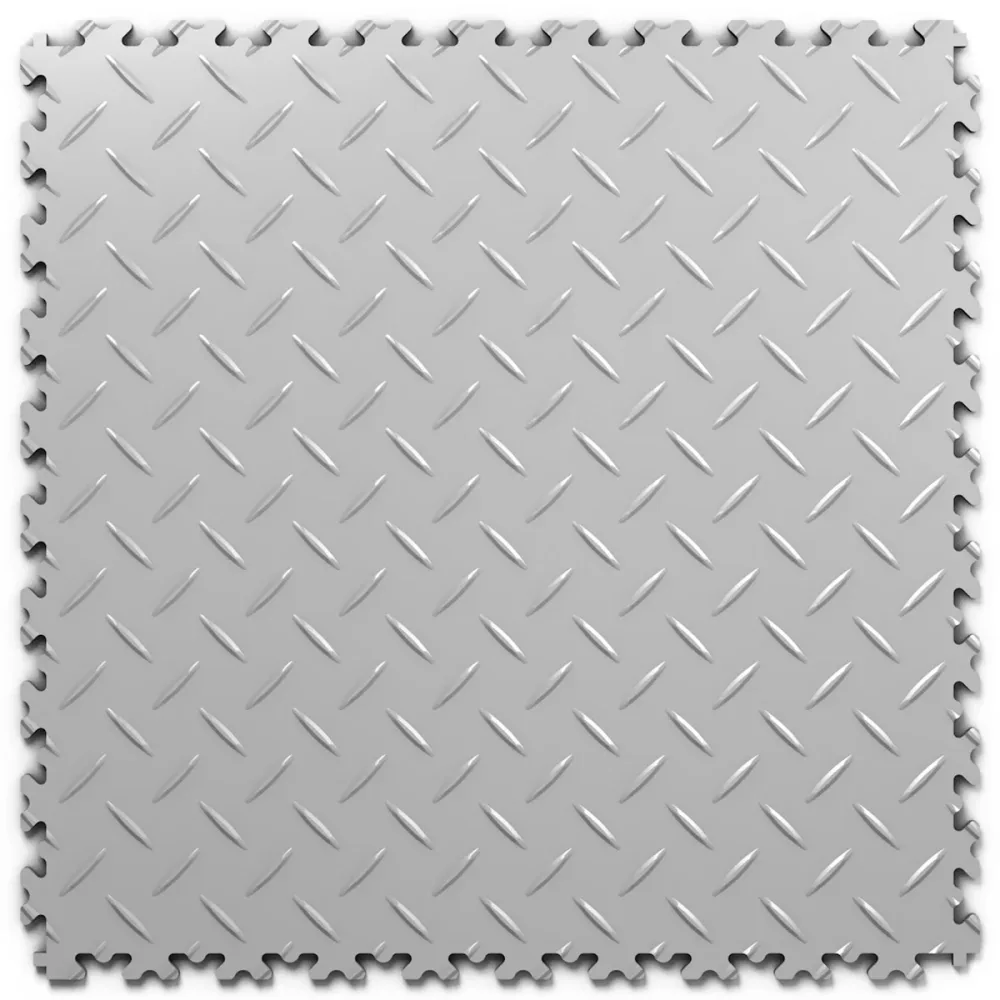
Seven millimetres of solid vinyl on a 510.5 mm tile: this is the line that takes the real work of an industrial unit — forklifts, pallet trucks, crates set down on the floor — while staying the most affordable of the industrial range. With the Ultra it is the only one available in all three textures, so it is also the least restrictive to look at.
Production, warehouses, industrial units, workshops, tyre shops
Invisible 6,7 mm line
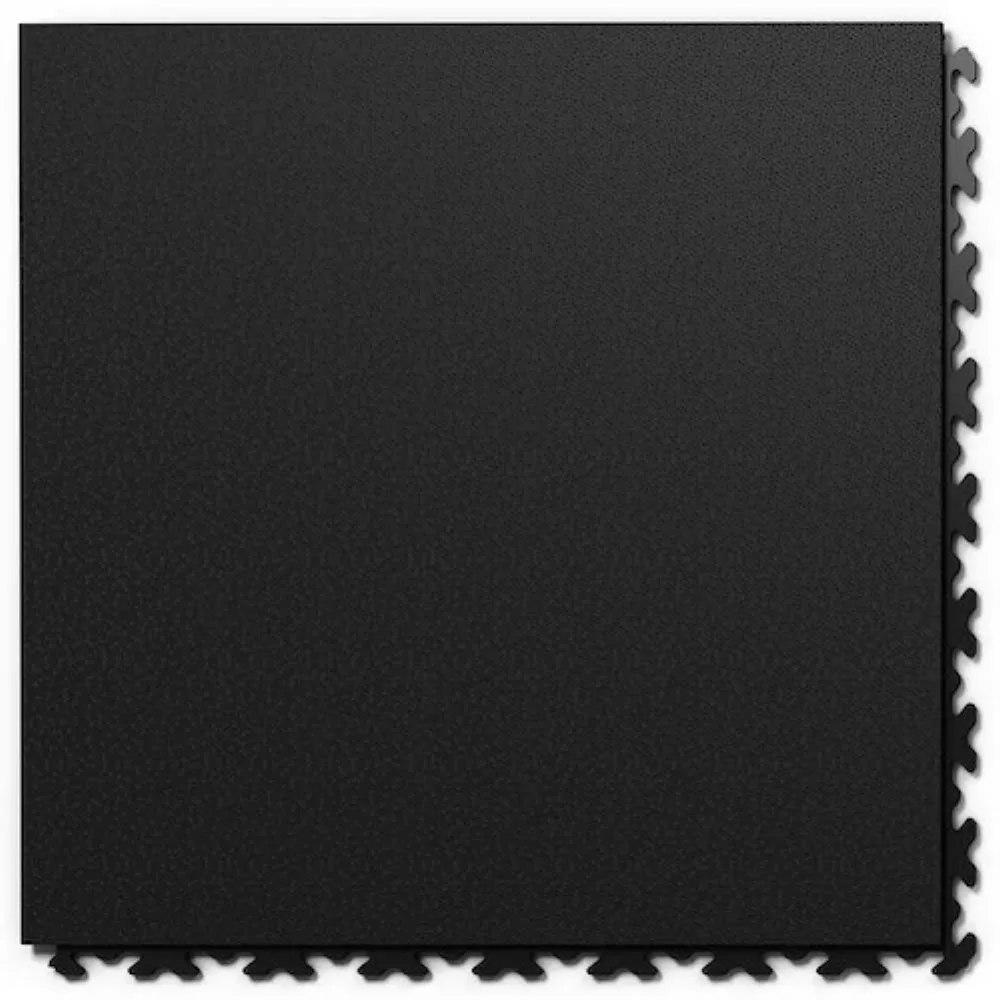
The same locking system as the others, but hidden below the surface: from above you see a continuous floor, without the jigsaw pattern of the joints. Six point seven millimetres that take high industrial loads, dynamic ones included. This is the showroom line, the machine room on display, the gym where the floor should look laid rather than assembled.
Showrooms, offices, retail, fitness centres, warehouses on display
Industry Ultra 10 mm line
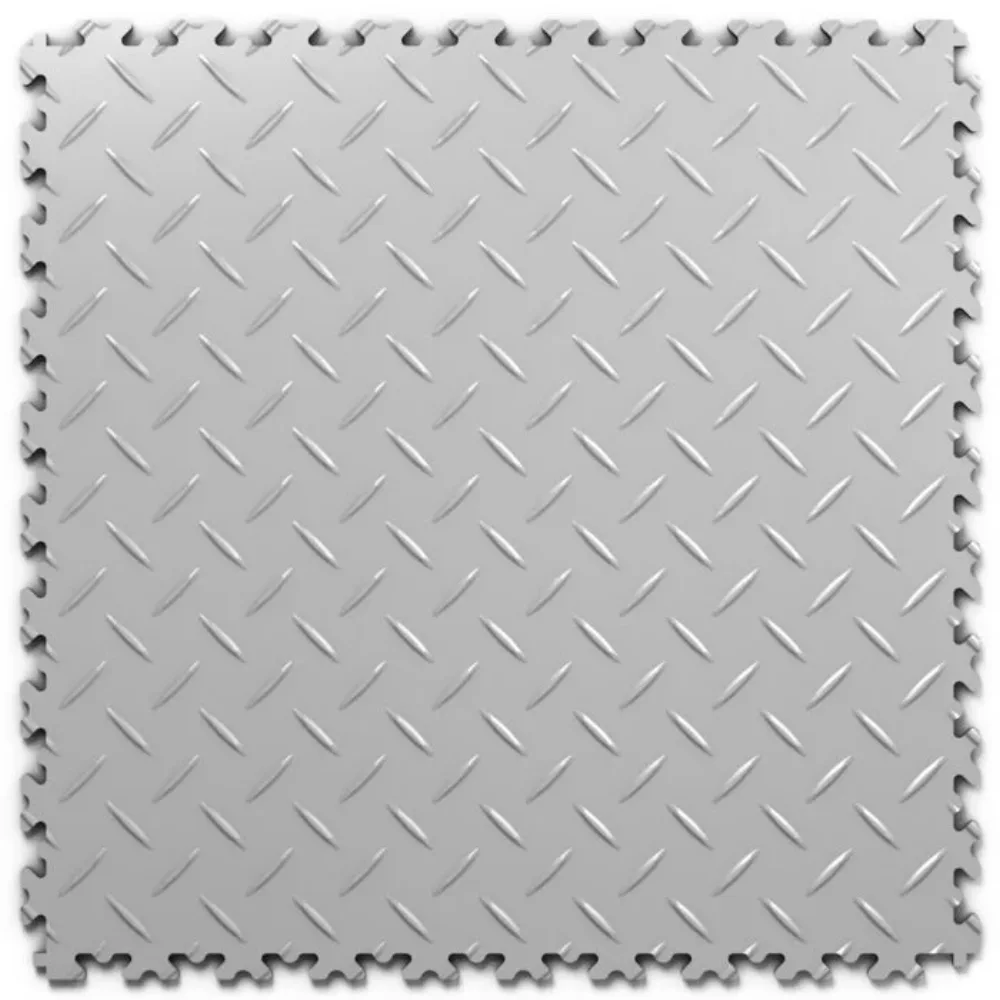
The toughest line: ten millimetres of solid PVC, three kilos a tile, dynamic loads up to 6,600 kg. It is used where the floor takes a beating every day — high-load warehouses, heavy industry, loading bays — and where the subfloor underneath is poor: the thickness bridges the irregularities instead of copying them.
Heavy industry, high-load warehouses, loading and unloading bays
Business / Design 7 mm line
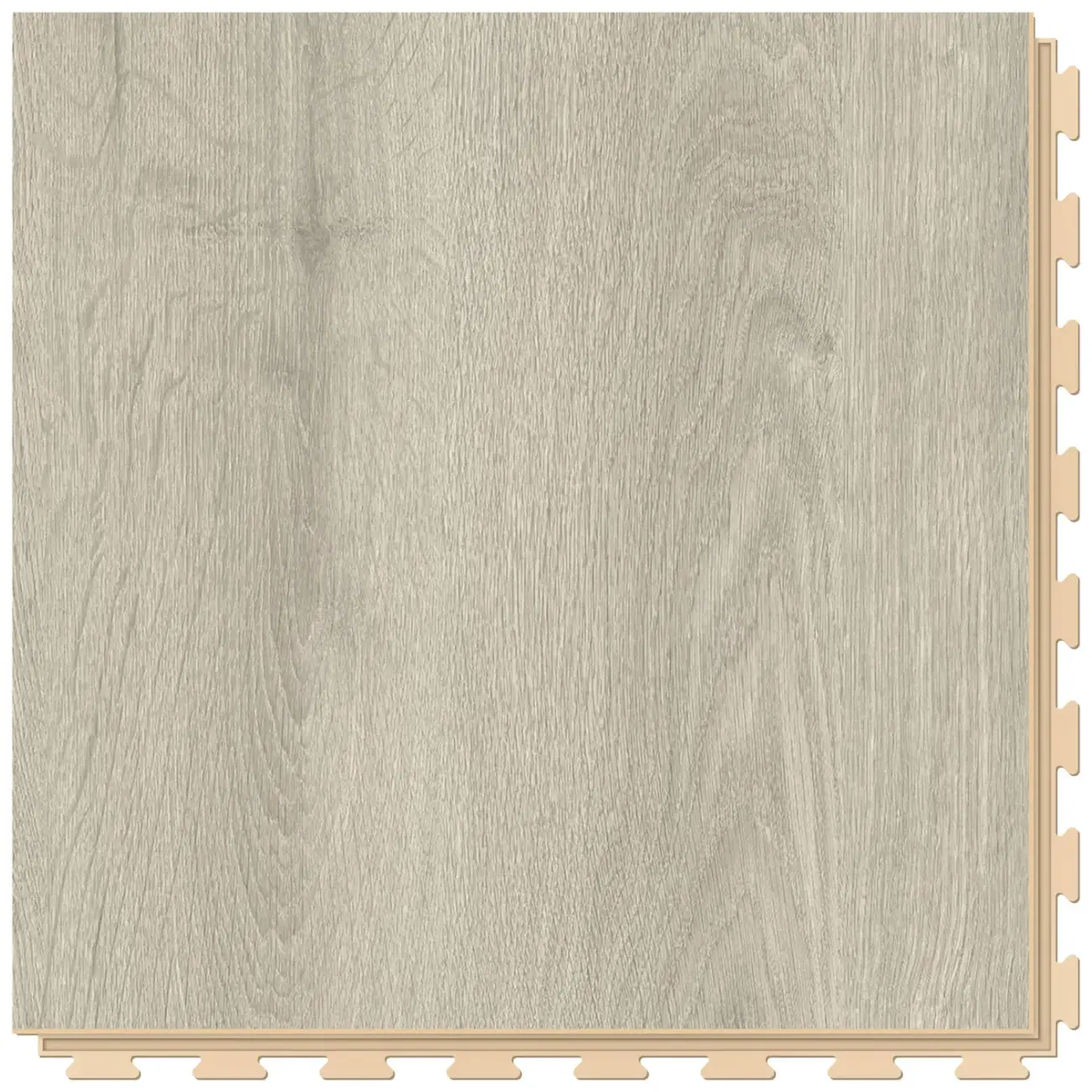
The same interlocking tile, with a decorative vinyl on top in wood or stone effect: it looks like a prestige floor and it lays like the others, overnight and without adhesive. It takes commercial traffic and office chair castors, which are the real enemy of thin flooring.
Shops, offices, hospitality, showrooms, front-of-house spaces
Which one to choose
Yes, loaded and every day: Ultra, 10 mm. Occasionally and empty: Industry, 7 mm. No, only light vehicles and people: XL at 4 mm is enough and costs less.
On an uneven subfloor you go thicker: thin tiles copy the dips underneath, thick ones bridge them. On a smooth, flat subfloor the XL is fine.
In a workshop, yes — visible joints actually help you see where one tile ends. In a showroom, no: Invisible has a hidden joint and reads as a continuous surface, and Design has a vinyl finish in wood or stone effect.
If you are still unsure, send us the measurements and the use: we will tell you which line we would use, and why.